



| Fan Flow Rate [ Q ] | Fan flow rate is the amount of air transferred by a fan per unit time. It is usually defined in m³/hour or C.F.M. (cubic feet per minute). Flow rate figures given in this catalogue for the products are the values provided when air flows freely without any obstacle in front of the fan. |
| Fan Speed [ N ] | Fan speed is the number of turns made by the fan per unit time. It is generally defined in rpm, as the number of full turns in one minute. |
| Fan Pressure [ P ] | Fan pressure is the pressure affecting on unit area during air transfer by the fan. It is generally defined in Pascal (Pa) or millimeter water column (mmWC). [1 mmWC = 9.8 Pa] |
| Static Pressure [ Ps ] | Static pressure is the pressure which the fan must supply to overcome the resistance to airflow caused by air ducts, filters and other elements of the ventilation system. |
| Dynamic Pressure [ Pd ] | Dynamic pressure is the pressure applied on unit area caused by the movement of the air transferred during the operation of a fan, based on air transfer speed. |
| Total Pressure [ Pt ] | Total pressure is the arithmetical total of static and dynamic pressure values [Pt = Ps + Pd]. |
Power Consumption: | Efficiency: |
| Power consumption is the amount of electric power required for the operation of the fan under certain conditions. Maximum power consumption of each product is specified in this catalogue. | Efficiency defines the amount of air that can be transferred by the fan against negative direction pressure forces. Since the products included in this catalogue have optimum body and fan designs, they operate with high efficiency when they are installed with suitable air inlets and outlets. |
Sound Level:
Human ear perceives sounds through the surrounding air molecules. Sound sources propagate sound in waves by vibrating the air. The waves reaching our ear initiate the hearing process by vibrating the eardrum. Sound level is defined in dB[A] for ventilation systems.Sound Power [Lw] : The amount of energy consumed by the sound source for propagating a sound.
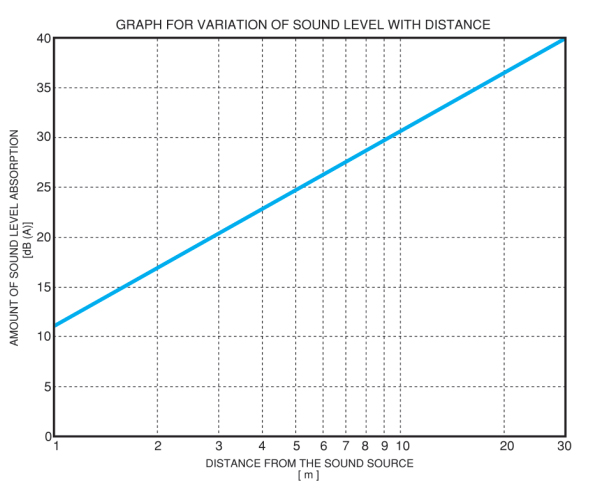
Sound Pressure [Lp] : The magnitude of the vibrations created by a sound source in the air. Sound pressure value changes based on the distance from the sound source.
ABOVE GRAPH SHOWS THE VARIATION OF SOUND LEVEL WITH DISTANCE FROM THE SOURCE.
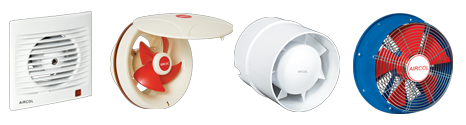
Axial Fans:
In axial fans, direction of air flow is parallel to the axis of rotation of the fan. In other words, directions of air entering the fan and exiting from it are parallel. This type of fans is mostly preferred where the amount of air to be transferred is more important than pressure losses.
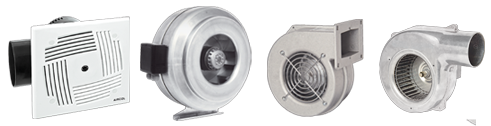
Centrifugal Fans:
In centrifugal fans, directions of air entering the fan and exiting from it are perpendicular. This type of fans provides high pressure air flow thanks to their impeller blade structures and numbers, and they are mostly preferred for applications with high amount of pressure loss.
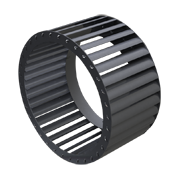 | Fans with forward inclined blades: Having small concave surface area and large number of blades, fans with forward inclined blades are able to provide low and medium pressure air flow. When operated beyond nominal conditions, this type of fans may cause damage because of overload on the motor. In addition, they quickly get contaminated in case of oily and dusty air transfer, since they are equipped with small blades. |
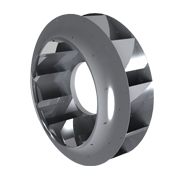 | Fans with backward inclined blades: Having small number of blades with large surface areas, fans with backward inclined blades are able to provide high flow and pressure thanks to their blade design. They do not cause overload on the motor when operated without any obstruction. In addition, they are much less effected from oil and dust contamination, since they are equipped with large blades. |
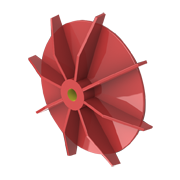 | Fans with straight blades: Equipped with straight flats, this type of fans is generally used for pneumatic transfer of materials although they have small number of blades. Operation beyond nominal conditions does not cause overload on the motor. |


